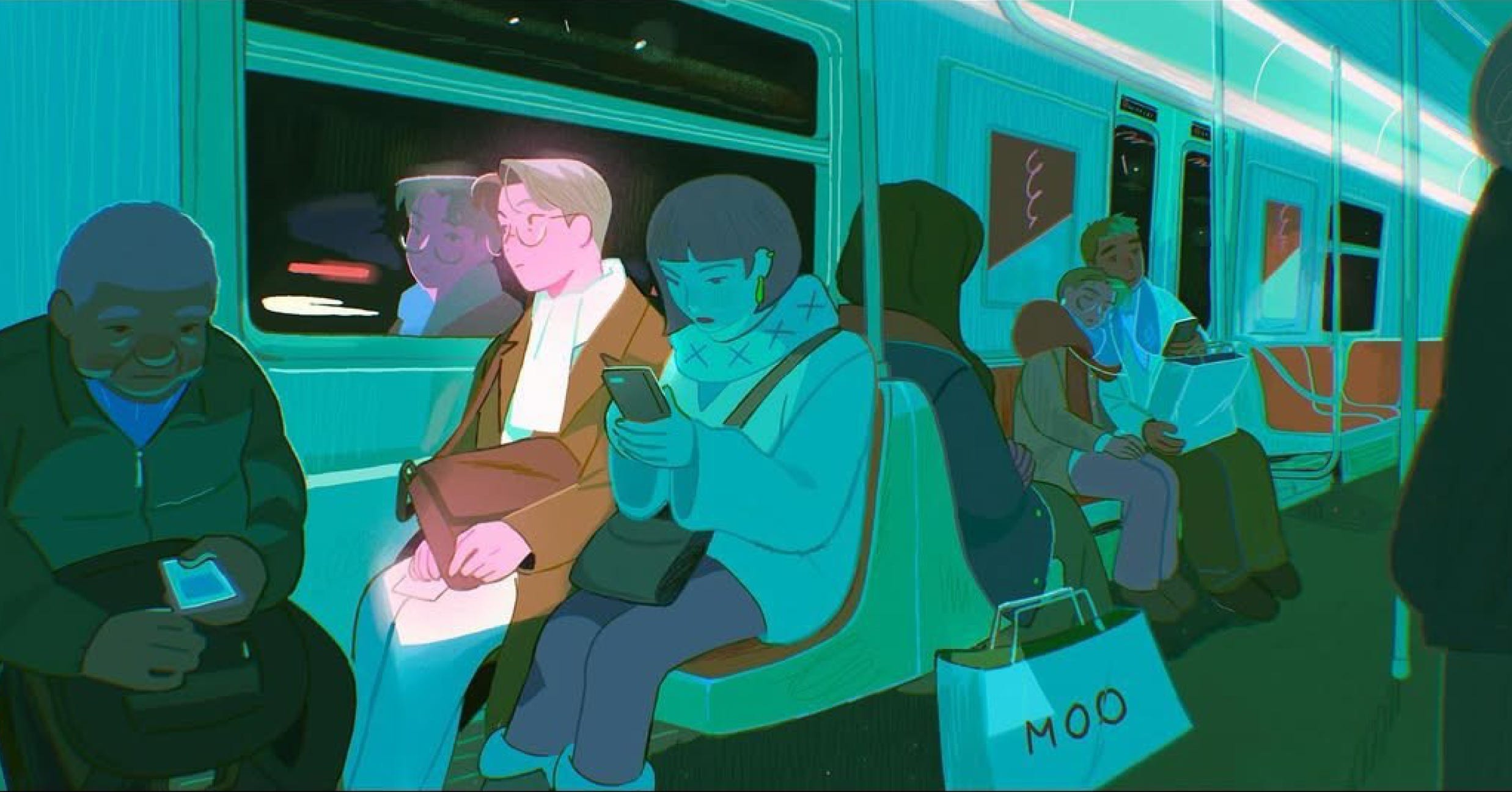
credits: @isdagat on Instagram
Introduction
My relationship with my phone for the last few months of 2024 is akin to an anchor on a ship. It always felt like something that held me in place. But unlike the relationship between an anchor and a ship that wants to be in place, I'd want to move. I'd want to put my phone down and live a little, but 2 hours would pass by, I'd still be on my phone and I wouldn't even know it.
I'm certain I'm not alone. All of us have had a moment of scrolling through Instagram for a couple of hours and reaching a point of disgust and mental fatigue. You stop scrolling, you exit the app forcefully, swiping up to close the stupid app, and in that brief moment you feel like you want to swing your phone at the wall. You feel drained and tired like your mind has overheated and your body is depleted of energy. I had many of these moments before I realised this was a problem.
The Problem
These apps, like the one you found this article on, are built to keep people scrolling endlessly. Social media has evolved (or devolved?) into entertainment media. There's hardly anything social about them anymore. The companies that build these apps have given up on harbouring connections and building relationships and moved to harvesting attention and eavesdropping on private conversations.
Regardless of how carefully you craft your feed, the side of the internet that is meant for mind-numbing content will find you. You will engage with it, forgetting this is not what you signed up for. People smarter than you are on the other side working against you, making sure you're on the apps longer, engaging with content you don't want to, and buying things you don't need.
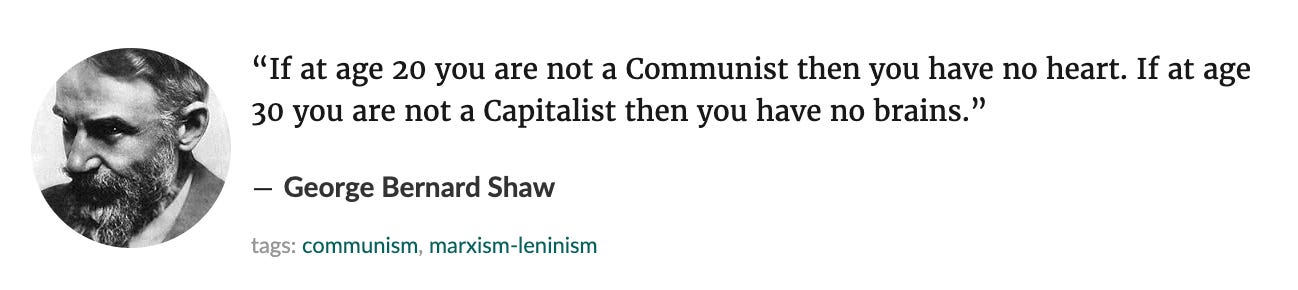
But this isn't a "big tech is bad, bring down the oligarchs" post. I think people get over their communist era much faster these days.
Making it Personal Again
This year, I wanted to make a change. I was spending 3-4 hours on my phone during weekdays and 5-6 hours on weekends, with the largest chunk of usage on social media. So I deleted the social media apps I was using the most. But I didn't realise the damage was already done.
I get up from the sofa to fetch some water and without a second thought I've picked up my phone and put it in my pocket. I can feel my phone's weight in my pocket, like a leech sucking on my mind. I don't have any real use for it, but my mind can't seem to let it go.
Our minds are so used to filling any free time with staring at the phone. We are addicted to the highs that these apps are built to induce, so like recovering druggies we swipe around the home screen searching for app dealers that will give us that same high.
Mental Health and Social Media
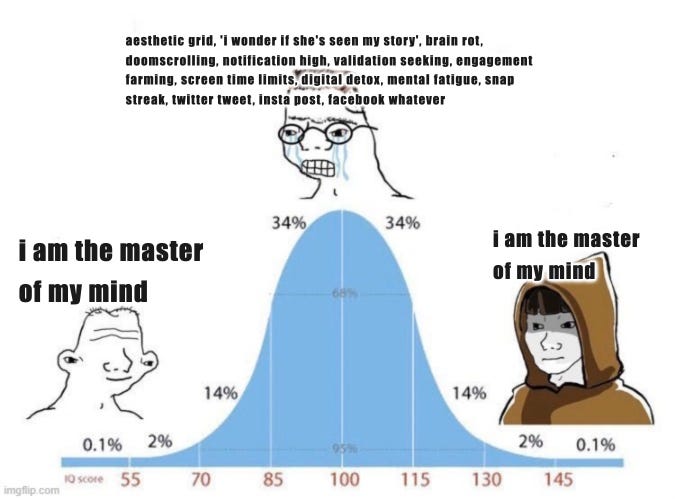
Our social media feeds have become our way to hide from our own thoughts. We use our phones to escape moments of stillness. Phones have become more than just tools that help us save time. They help us loose the sense of time instead.
We quickly open up the apps to not let our minds wander. Because if we let our minds wander we might find wonderful thoughts hidden in the corner of memories you never revisited that might bring a smile to your face, or add a contradictory perspective to an opinion you held strongly. But that involves cognitive effort, as simple as thinking sounds its ridiculously hard especially when there's no direction, goal, or motive.
Have you tried thinking? Have you tried thinking of a new solution to a regular problem? To maintain a single line of thought without getting derailed by random memories of Instagram reels showing butter chicken pasta recipes?
My immediate realization was my ability to focus when it's not work-related had significantly declined. Since work comes with money, status, power and all those extrinsic motivations, it's easier to trick the mind to focus. But when it comes to leisure activities, or trying to gain knowledge out of curiosity, it's incredibly harder to focus or resist the urge to reach for the phone.
Listen:
This isn't a power of will issue either. The apps are designed by teams of psychologists and engineers who understand human behavior better than we understand ourselves. They've studied and optimized every notification, every animation, every piece of content to keep us engaged. It's a David vs Goliath situation, except David didn't have a chance to practice with the sling.
When my friend asked me why I wasn't posting as much, I mentioned I'd uninstalled the app and they reacted saying "that's so cool." I haven't had a single person tell me I'm missing out on something. Everyone seems to agree uninstalling these apps or opening them occasionally is the best solution.
In the past three months, I'd occasionally download Instagram to post about a life event, watch a few stories, like some posts, and uninstall again. That's been highly beneficial in my ability to learn, to live an intellectually rich life, to actually be present during conversations, and to have the patience to brood with my thoughts.
Sometimes I'd brood so hard that I'd look like I was broken. When I'm chasing a thought I really can feel all the neurons in my brain firing rapidly as I connect dots to find meaning. It's exhilarating, like the excitement you feel when you're solving a math problem and you already know how to approach the next three steps.
Conclusion
Cigarettes were all the hype at one point. You could even smoke in airplanes, which seems wild today considering how delicately airplane travel is treated. Could that same timeline play out for social media too? Will history textbooks write about the time social media almost ruined humanity?
Maybe the transition from "you have to get onto Facebook" to "you're not on Instagram? Lucky you!" is the beginning of the end for social media.
Maybe in 10 years' time we'll have people spending more time offline and a few chronically online trying to quit and regain control of their mental health.
Maybe those who spend no time or less time online are the early adopters of the new old way of living life.
Maybe we'll stop taking so many pictures, just to find the perfect one to post and we'll live in the moment.
Maybe we'll stop asking our romantic interests for their Insta ID and ask to meet them in person.
Maybe we'll stop stalking people online and stalk them in person.
I'm kidding, some things are safer done online. If you're stalking on LinkedIn though, make sure they don't have a paid account otherwise you'll look desperate. But I also think it's cool to be desperate—if you're desperate for anything, be desperate for love.
This isn't a plea to go back to the past and install landlines in everyone's home. But how we've let phone evolve from just tools to master of our thoughts is quite worrying. Civilisations progress through innovation and experimentation. In the history of humanity, what place will mobile phones and social media have I wonder.